

Thinking of Becoming a Landlord in Jacksonville, NC? A Calm Start Guide for PCS Homeowners
If you just got orders and you are looking at your house thinking, “I cannot sell this and I cannot afford to carry it,” you are not alone. Jacksonville and surrounding areas are full of people who didn’t intend to be landlords, but are. People buy a home, plan to stay, then life changes. Orders change. The market shifts. Or you realize you want to keep the property as a long-term investment, even if you are leaving for a while.
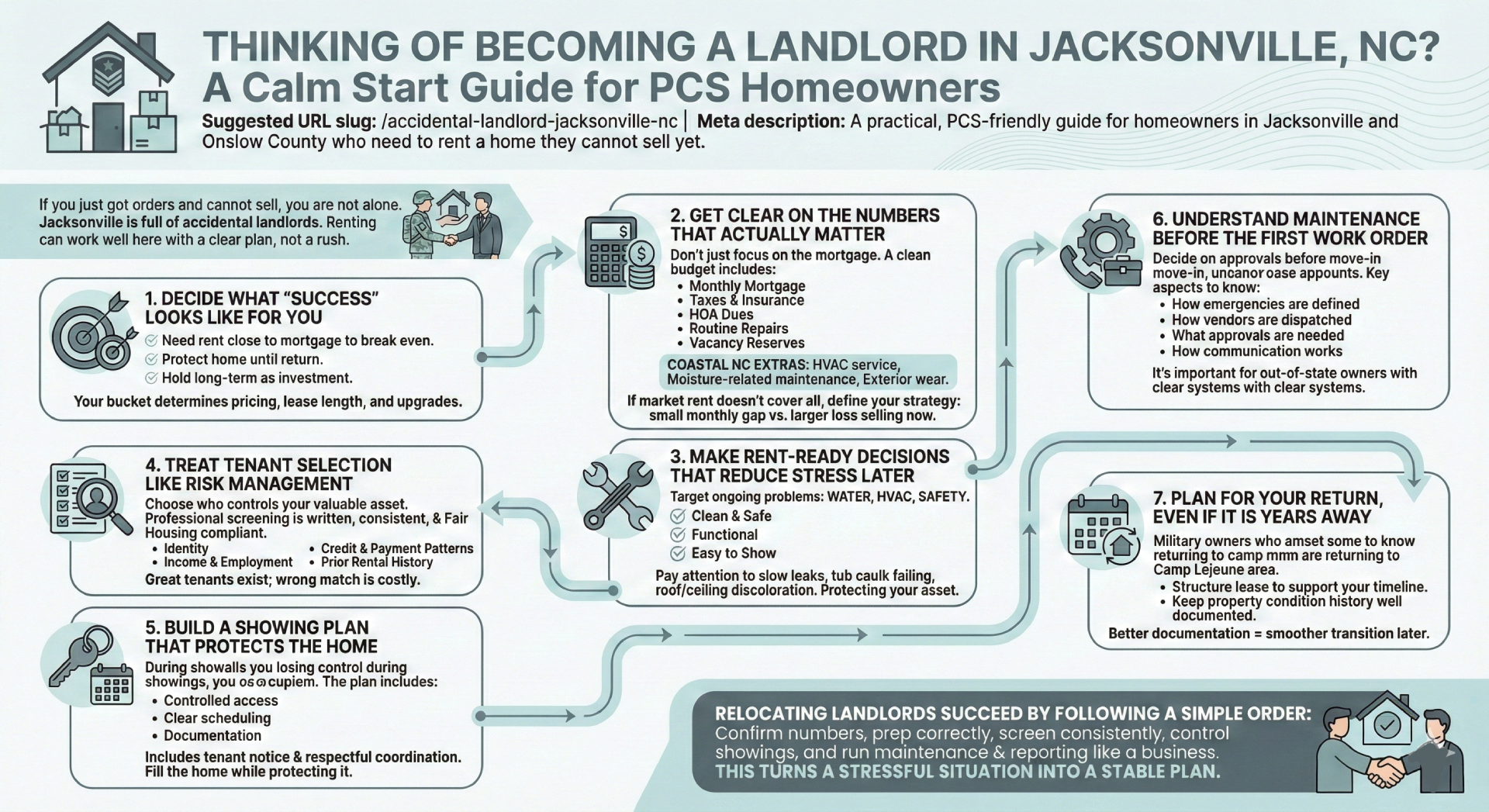
The good news is that renting out your home can work very well here, especially in Jacksonville, North Carolina. The key is starting with a clear plan instead of rushing into the first “good enough” option.
Step 1: Decide What “Success” Looks Like For You
Most owners fall into one of three buckets:
You need the home to rent close to the mortgage so you can break even.
You want to protect the home until you return to the area.
You want to hold it long-term and treat it like an investment.
The right decisions around pricing, lease length, and how much you invest in upgrades before you list are largely determined by which bucket best describes your situation.
Step 2: Get Clear On The Numbers That Actually Matter
Owners often focus only on the mortgage payment. That is understandable, but it is not the full picture.
A clean rental budget usually includes the monthly mortgage, taxes, insurance, HOA dues if applicable, routine repairs, and vacancy reserves. In coastal North Carolina, you also want to plan for HVAC service, moisture-related maintenance, and exterior wear.
If the market rent does not cover everything today, that does not automatically mean renting is a bad decision. It means you need a strategy. Some owners choose a small monthly gap now to avoid a much larger loss from selling at the wrong time. Others adjust the plan and sell later when the timing is better.
Step 3: Make Rent-Ready Decisions That Reduce Stress Later
The most expensive mistakes are the ones that create ongoing problems. Think water, HVAC, and safety.
Before you list, you want confidence in the basics: the home is clean, safe, functional, and easy to show. If you are leaving town, the goal is a property that will not create urgent issues while you are states away.
In our market, we pay special attention to anything that can turn into water damage, like slow leaks under sinks, failing caulk at tubs, or roof and ceiling discoloration. That is not being picky. That is protecting your asset.
Step 4: Treat Tenant Selection Like Risk Management, Not A Gut Feeling
You are not just picking a person you like. You are choosing who will control a valuable asset every day.
A professional screening process is written, consistent, and fair housing compliant. It verifies identity, income, employment, credit and payment patterns, and prior rental history. The “why” is simple: great tenants exist, but the wrong match can be costly in time, money, and stress.
Step 5: Build A Showing Plan That Protects The Home
Showings are where many owners lose control. Keys float around. Access is unclear. Homes get left unlocked. Or showings are so inconvenient that they slow down leasing.
A professional showing plan has controlled access, clear scheduling, and documentation. If the home is occupied, it also includes tenant notice and respectful coordination. That is how you fill the home while protecting it.
Step 6: Understand Maintenance Before The First Work Order Hits
The best time to decide how maintenance approvals work is before a tenant moves in.
Owners should know how emergencies are defined, how vendors are dispatched, what approvals are needed, and how communication works. In Jacksonville and surrounding areas, it is common for owners to be out of state. That makes clear systems even more important.
Step 7: Plan For Your Return, Even If It Is Years Away
Many military owners keep the home because they expect to come back to Camp Lejeune or the Jacksonville area later. That is a smart plan when it is handled intentionally.
If your goal is to move back in, you will want a lease structure that supports your timeline and a property condition history that stays well documented. The better the documentation, the smoother the transition later.
Relocating landlords do best when they stop trying to solve everything at once and instead follow a simple order: confirm the numbers, prep correctly, screen consistently, control showings, and run maintenance and reporting like a business. That is what turns a stressful situation into a stable plan.